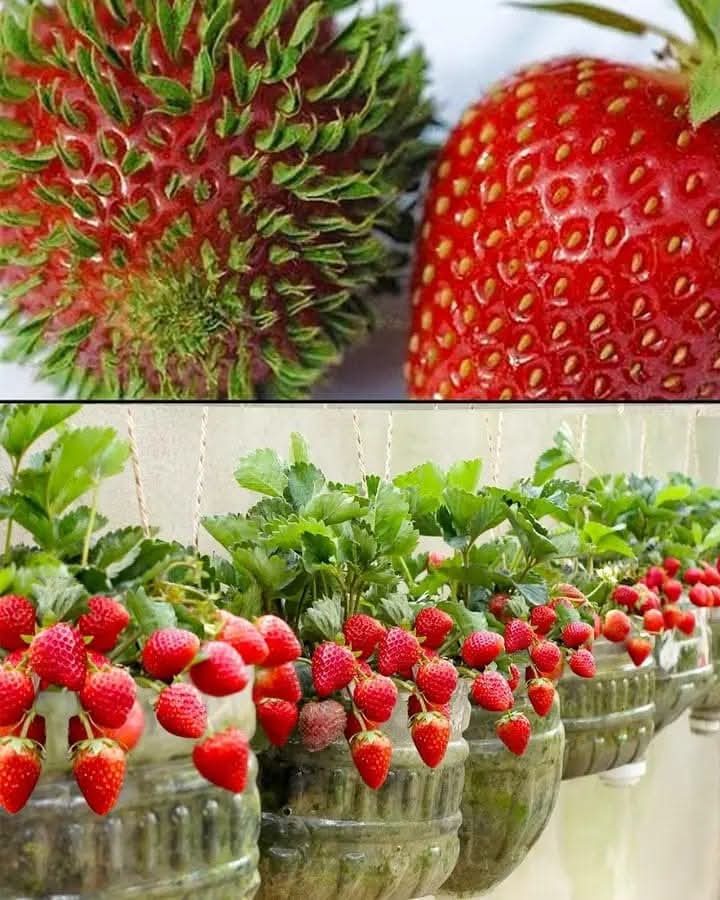
How to Grow Strawberries at Home: The Secret to Abundant Production in 5L Plastic Bottles
- Choose the Right Containers: 5-liter plastic bottles, often discarded as waste, can be repurposed to create a thriving strawberry garden. Cut the tops off the bottles, leaving the bottom section to function as a self-contained growing environment.
- Soil Preparation: Strawberries thrive in well-draining soil, rich in organic matter. A mix of potting soil and compost in equal proportions works wonders. Fill your plastic bottles with this mixture, ensuring it is light and fluffy, allowing the roots to breathe.
- Selecting Strawberry Varieties: There are three main types of strawberries: June-bearing, everbearing, and day-neutral. For continuous production, opt for everbearing or day-neutral varieties. Alpine strawberries are also a great choice for container gardening due to their compact size.
- Planting Strawberries: Plant strawberry runners or young plants in the bottles. Ensure the crown of the plant sits just above the soil’s surface, and space them about 8-10 inches apart to allow for proper growth.
- Sunlight: Place your containers in a sunny spot where they can receive at least 6-8 hours of sunlight daily. Strawberries thrive in full sun, which is essential for flowering and fruit production.
- Watering: Keep the soil consistently moist but not waterlogged. Containers tend to dry out more quickly, so regular watering is crucial, especially during hot weather.
- Fertilization: Strawberries are heavy feeders. Apply a balanced, slow-release fertilizer every 4-6 weeks during the growing season to ensure abundant fruit production.
- Pest and Disease Management: Keep an eye out for common strawberry pests and diseases, such as aphids, slugs, and gray mold. Regular inspection and organic pest control methods will help safeguard your strawberry crop.
- Pruning and Runner Control: To encourage vigorous growth and increase your strawberry production, trim off excess runners. This directs the plant’s energy towards fruit production and ensures a healthier harvest.